Your Cart is Empty

Built Tough. Built for Adventure.
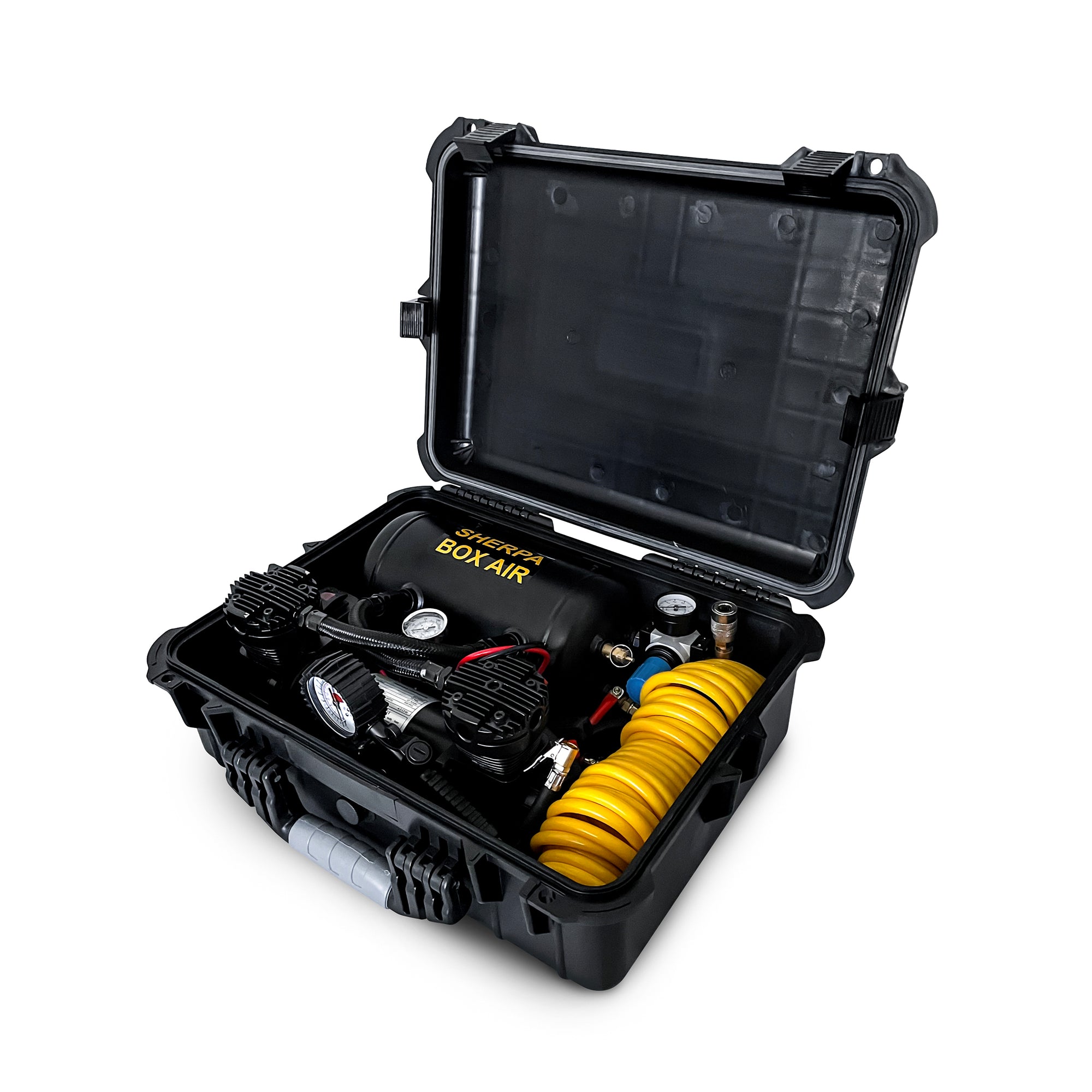
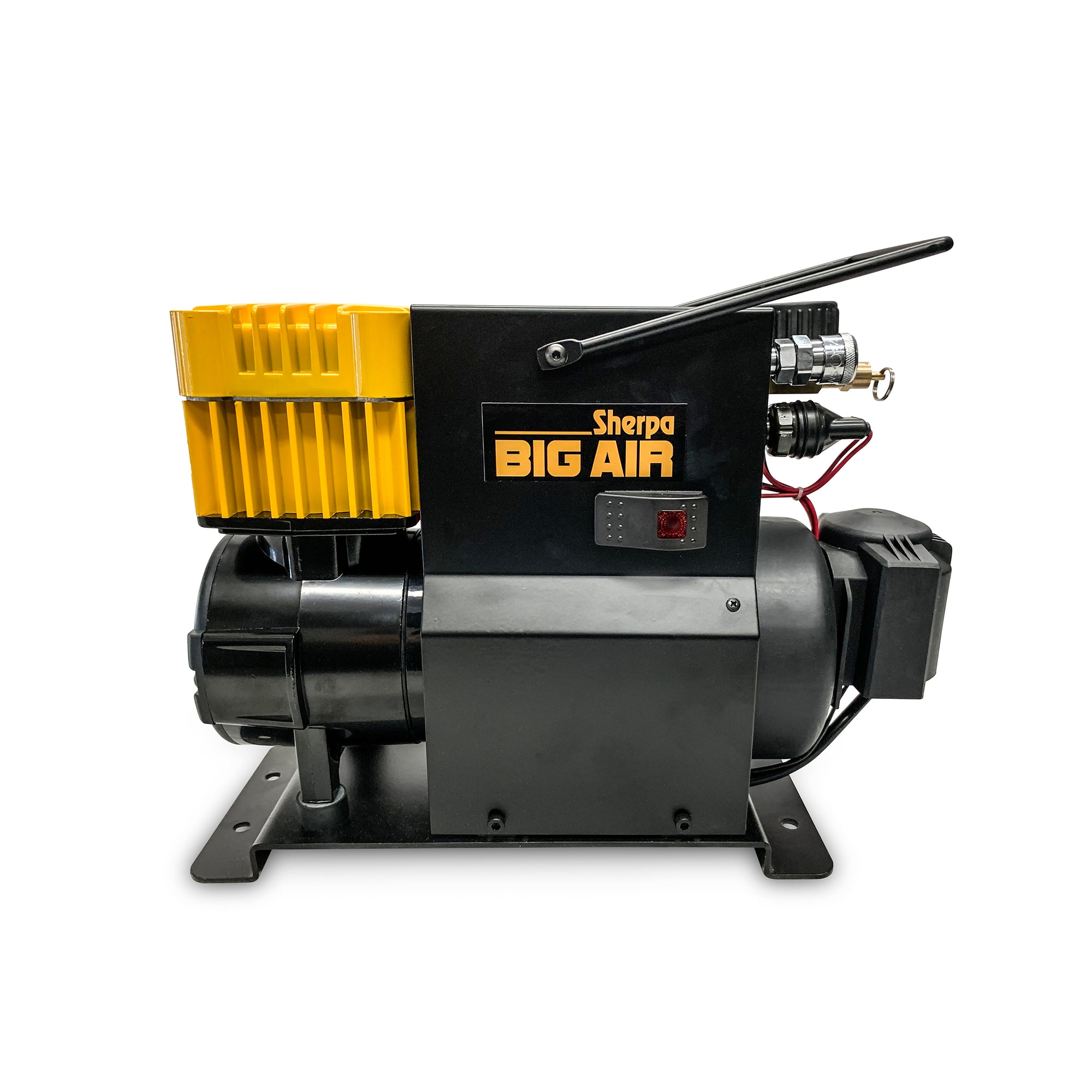
Sherpa 4x4 designs and manufactures some of the highest quality air compressors on the market, including the renowned “Big V4”,“Big Air” and “Box Air” models.
Big Air – A heavy-duty, easy-to-operate compressor producing high volumes of oil-free air. Available in 12V and 24V, Big Air integrates seamlessly with on-board air systems and features an integrated air tank, pressure switch and safety release valve. Ideal for camping, off-grid living, and any application demanding reliable, high-volume compressed air.
Box Air – A compact yet rugged 12V portable compressor with a high-volume, dual-head output. Designed for fast, oil-free air delivery, it’s perfect for off-road adventures and remote tyre inflation. Housed in a heavy-duty carry case, the Box Air includes everything you need including a 150PSI air tank, pressure switch and safety release valve for dependable performance anywhere you travel.
Whether you’re touring, camping or tackling remote tracks, Sherpa 4x4 compressors are your go-to solution for reliable, high-performance air on demand.
SEE WHAT OUR CUSTOMERS HAVE TO SAY!
Sherpa 4x4 'Grunter' Electric Boat Trailer Winch
Excellent so far. WE are using it in a commercial application to help run Air jacks for Mobile tyre changing.
Sherpa 4x4 'The Mustang' - 9,500Lb Winch
Vg
Great winch fast delivery would buy again thanks
Good customer service
Works great,worth buying.
Ordered my winch Thursday morning was delivered to my door the next day awesome service thanks
Happy with my purchase to date. Well packaged and delivered in a timely fashion. Quality appears good. Now time to get some hours on it.
Wireless remote
Replacing original winch robe which was 8 years old & well used. New rope came quickly & quality is excellent & easy to install. Definitely recommend Sherpa product specially their winches
Quality product.
Fast shipping. Came in a nice carry bag. Good brass fittings.
Good kit with everything for a beginner offroader. Mechanic had no issues installing into a 70 series ARB bar.
durable canvas and zips. Ok for holding a jack and a few tools.