Your Cart is Empty

Powerful. Reliable. Engineered for Professionals.
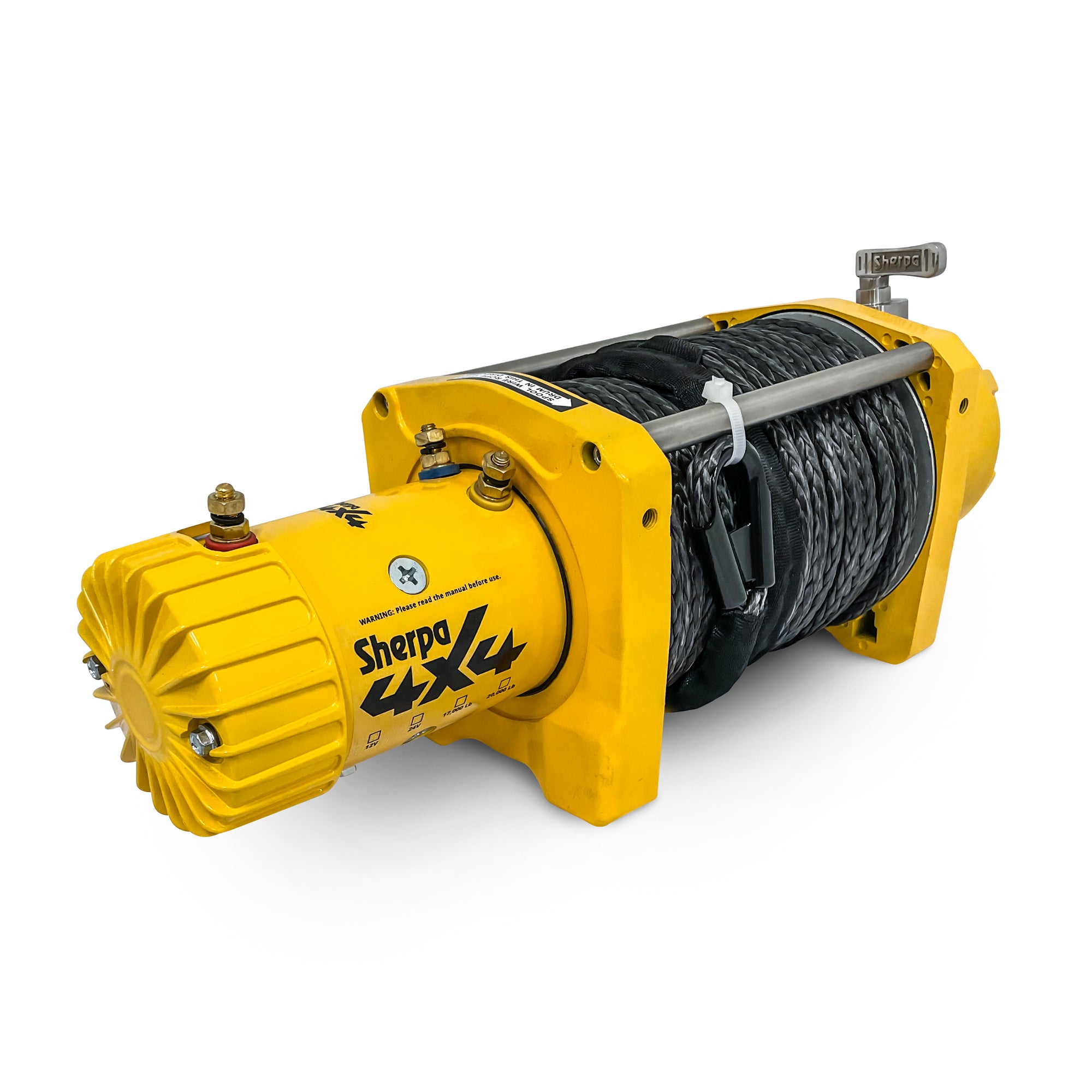
When it comes to loading heavy equipment from trailers or trucks, the Sherpa 20,000lb Tow Truck Winch delivers unmatched performance. Engineered specifically for hauling containers, machinery, and other heavy loads from flatbeds, tilt trays, and custom trailers, this winch was designed with real customer needs in mind.
Key Features:
Genuine waterproof Albright International solenoid for long-lasting reliability
Robust 3-stage planetary gearbox for maximum pulling power
Choice of 28 m steel or synthetic cable
Available in 12V or 24V configurations
Automatic electric brake release, allowing smooth, safe operation in either direction
With its powerful braking system and professional-grade design, the Sherpa 20,000lb Tow Truck Winch makes light work of even the heaviest recovery and loading tasks. Free and fast shipping throughout Australia.
SEE WHAT OUR CUSTOMERS HAVE TO SAY!
The Sherpa Grunter boat trailer winch arrived promptly in it's custom packaging.
Mounting the winch on the boat trailer was pretty much straight forward apart from having to lengthen the elongated hole in the mounting plate by five millimetres to match the mounting holes on the trailer.
Some time was required to design a mounting plate and associated bits for the control box and another for the remote control head unit. Given the winch certainly stands out when the trailer is parked at the boat ramp car park, it was decided to combine the control box mounting plate with a theft proof winch mount just in case some individual decided they need the winch more than I did.
In all, mounting all of the components was a straight forward exercise, the electrical wiring too was a breeze, the supplied cables for the vehicle were ample though I did opt for a dedicated negative cable rather than using the vehicle chassis for the negative rail.
After handling the various parts it became obvious the quality is second to none, even down to the paper and colour print quality of the user manual.
At this stage the remote has only been used twice and it certainly makes handling the boat and controlling the winch single handed with no drama particularly in a cross wind retrieve.
The Grunter is certainly an impressive beast and will make life much easier when it comes time to retrieve the boat after a long day on the water, particularly as one gets older.
Only recently had winch installed on my boat trailer and auto electrician wired up my 4x4 truck and winch, used it the other day to test it out and it went like a dream, very easy to use and operate and pulled my boat onto the trailer very quickly. Very well made and should last me a life time, so far am very very happy with this purchase, overall a great winch and cost was very reasonable .
Sherpa 4x4 'BIG V4' Air Compressor (400 L/min) Bundle Deals
Sherpa 4x4 Tyre Deflators - 4 Pack
Great product. Wish I had purchased it when I bought the winch. Just wondering if it maybe an idea to put it in and sell it as all one product. A combo pack. Makes life easy. Just a thought.
Sherpa 4x4 'Grunter' Electric Boat Trailer Winch
Excellent so far. WE are using it in a commercial application to help run Air jacks for Mobile tyre changing.
Sherpa 4x4 'The Mustang' - 9,500Lb Winch
Vg
Great winch fast delivery would buy again thanks
Good customer service
Works great,worth buying.
Ordered my winch Thursday morning was delivered to my door the next day awesome service thanks
Happy with my purchase to date. Well packaged and delivered in a timely fashion. Quality appears good. Now time to get some hours on it.
Wireless remote