Your Cart is Empty

The Ultimate in Performance for Every Application
Sherpa 4x4 winches are engineered to deliver uncompromising performance and reliability in the toughest conditions. Our extensive range of 4WD winches covers everything from weekend off-road recoveries to full-blown competition setups and heavy-duty truck applications.
One of our most popular models, the 17,000lb winch, has become a favourite with Grey Nomads towing caravans across Australia. When you’re exploring the country’s most remote regions, you need the peace of mind that only a Sherpa winch can provide.
With unmatched pulling power, premium components and proven durability, Sherpa 4x4 winches give you the confidence to tackle any recovery situation – anywhere, anytime.
View Our Latest Product Promotion Video
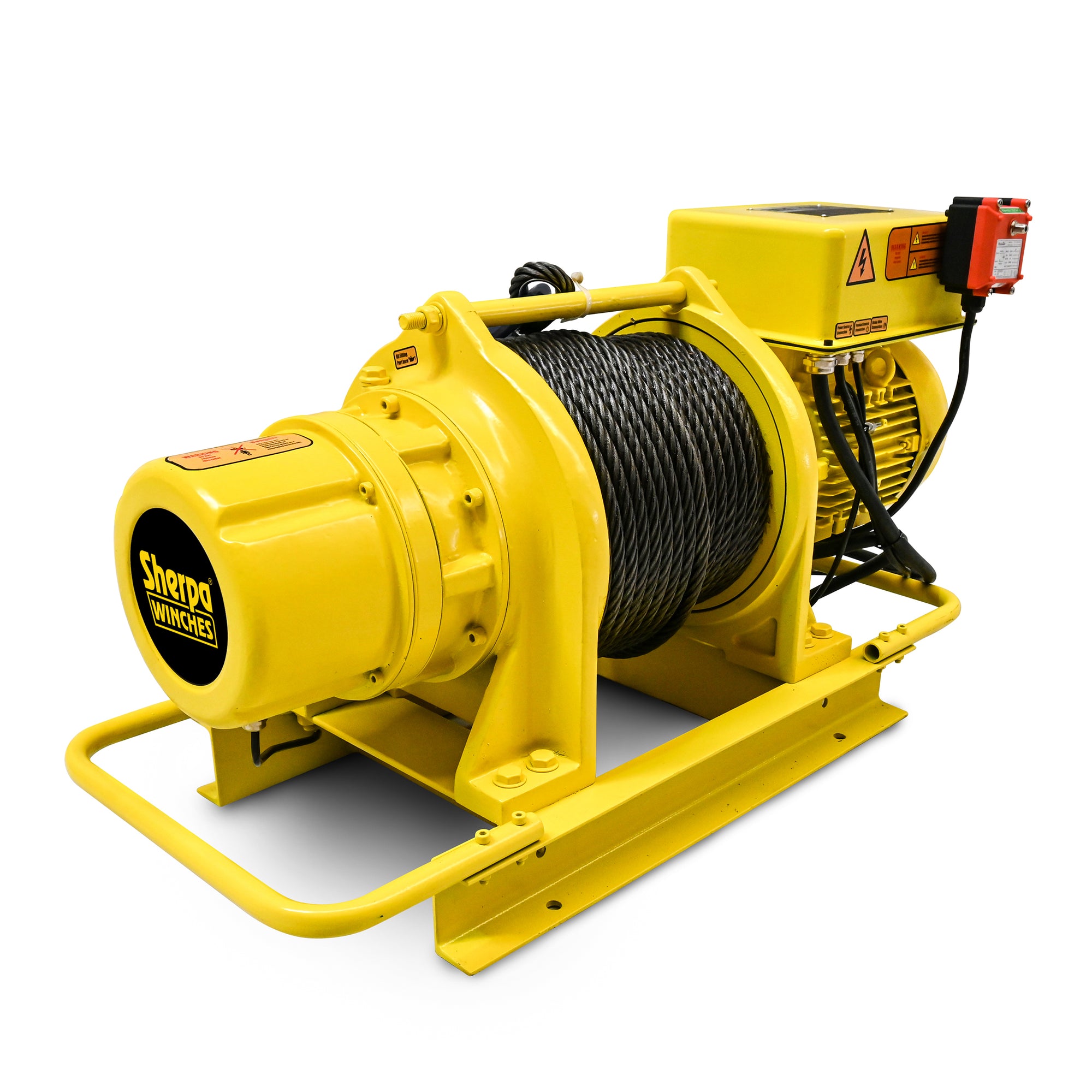
At Sherpa 4x4, our winch range is designed and specified in-house by our own engineers. Unlike many other brands, we started at the very top — developing The Mule, our dual-motor 17,000lb winch built for heavy-duty vehicles like the Iveco Daily and Mitsubishi Canter.
By engineering the biggest and toughest first, every Sherpa winch in the range inherits the same uncompromising quality, strength and reliability. This top-down approach means whether you’re fitting out a work truck or a weekend 4WD, your Sherpa winch is built to withstand the harshest conditions and toughest recoveries.
From The Mule to our mid-range models, Sherpa 4x4 winches are proven to handle whatever you and the outback can throw at them.
Every Sherpa 4x4 winch begins life with extensive 3D modelling and precision engineering by our in-house team. This commitment to design excellence ensures each model delivers unmatched strength, reliability and performance in real-world conditions.
Want to learn more about how we create industry-leading winches? Sherpa 4x4 winch development. to see the innovation behind the power.


Sherpa 4x4 offers a wide range of winches to suit every four-wheel drive and recovery application. With multiple configurations available, it’s easy to choose the right model for your needs.
Start by considering your pulling power requirements:
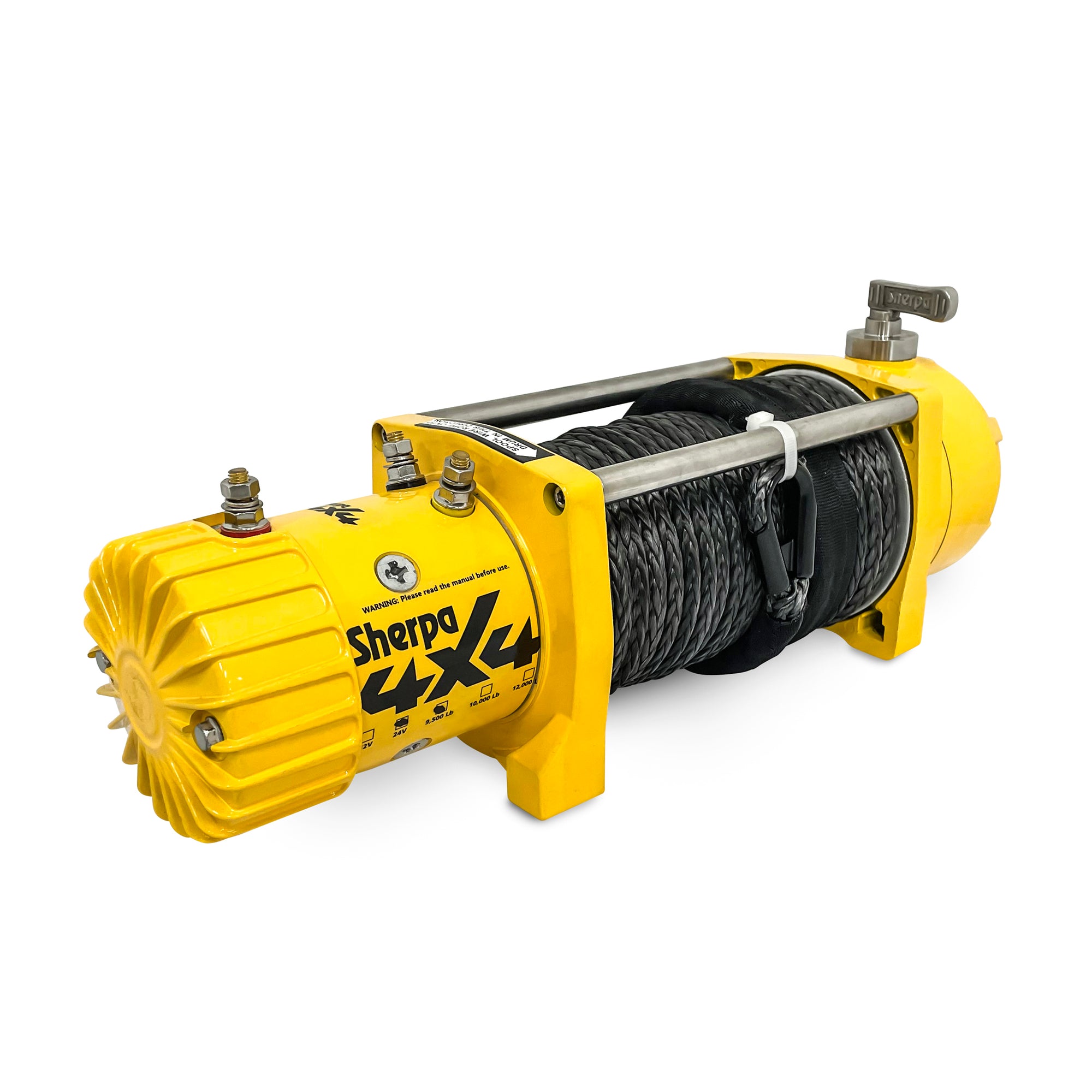
Light 4WDs & General Off-Roading – Our 9,500lb and 12,000lb winches are ideal for most recreational users. The compact 9,500lb model fits almost all bullbar styles, including ARB and TJM bars.
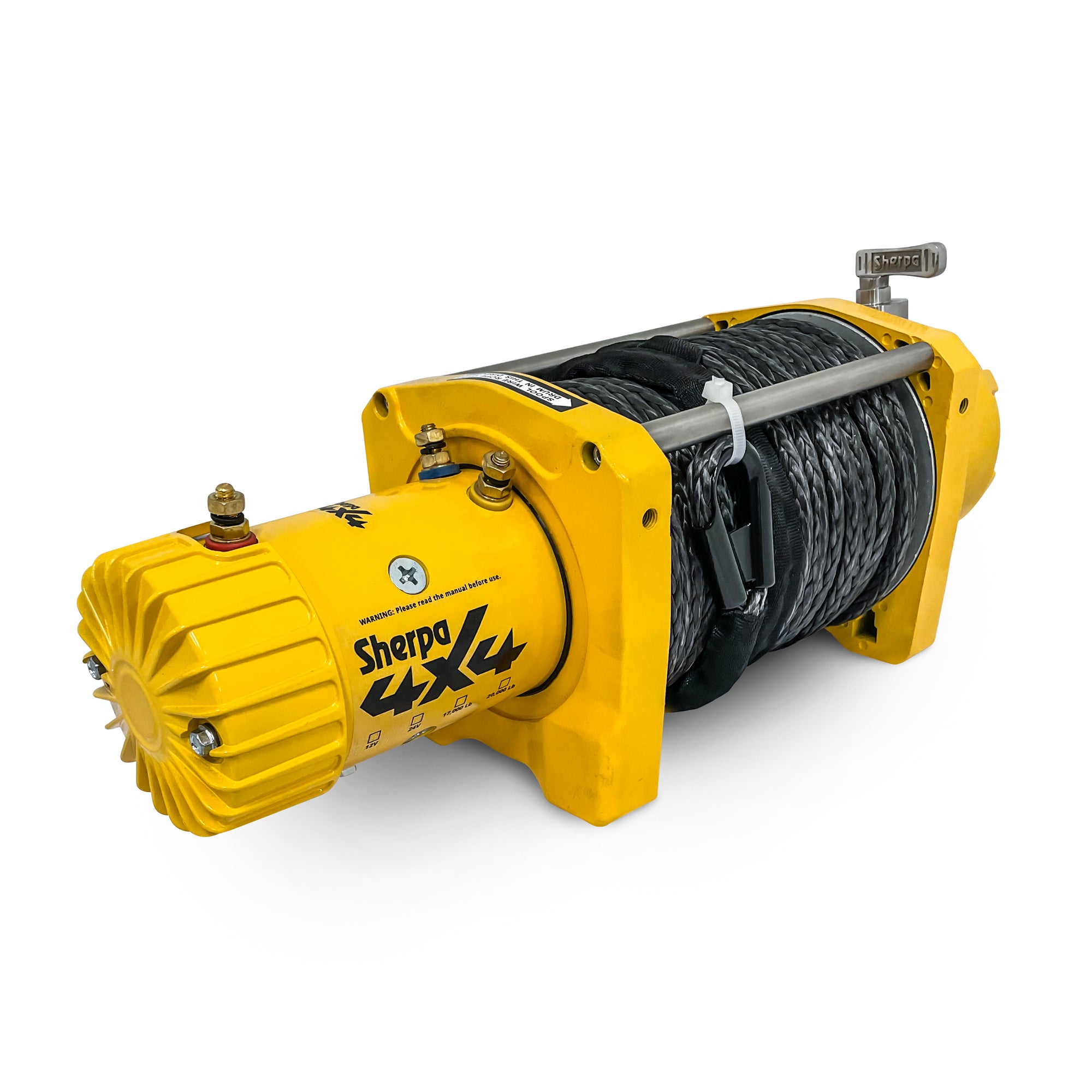
Heavier 4WDs – For vehicles such as LandCruisers, Patrols and large American 4x4s like Ford and Dodge, step up to our 17,000lb winches. While slightly larger, most winch bars provide ample space for easy fitting.
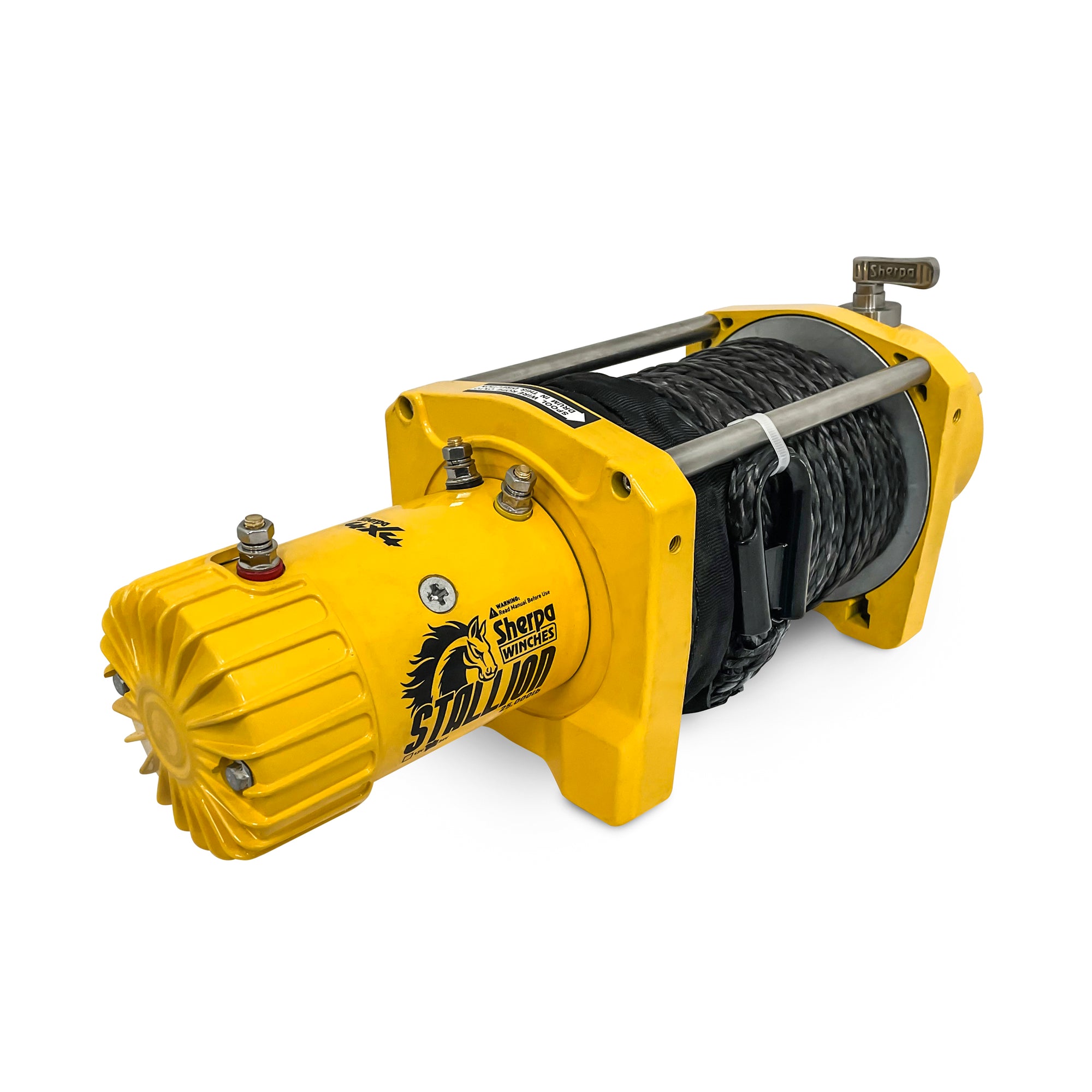
Trucks, Competition Vehicles & Heavy Loads – Our dual-motor winches are built for extreme pulling power. Perfect for trucks, heavily modified 4WDs, or towing applications like caravans, these winches spread the load over two motors to improve duty cycles, reduce strain on drives and solenoids, and provide redundancy even if one drive or solenoid fails, the other keeps you moving.
With Sherpa 4x4 winches, you can be confident you’ve chosen a model built for your vehicle, your adventures and the toughest recovery situations.
When choosing your Sherpa 4x4 winch, you can select either synthetic rope or steel cable to best suit your needs.
Why most customers choose synthetic rope:
Lightweight and easy to handle
Floats on water and won’t kink or coil back on itself
Comparable breaking strain to steel cable
Safer and easier to use in demanding off-road conditions
Although synthetic rope is more expensive, its ease of use and safety benefits make it the most popular option, with over 90% of Sherpa customers choosing it for their winches.
Fairlead Options & Rope Lengths
Depending on your choice of rope or cable, your Sherpa winch will be supplied with either a roller fairlead or a winch hawse (30 mm offset hawse available on request). Rope lengths are available in 28 m or 45 m options please note the 45 m rope requires a slightly larger barrel and winch mounting base than the 28 m version.
24 Volt Options
Sherpa 4x4 offers all winch combinations in 24 volt! Our Brisbane team assembles winches with 24V drives and solenoids on demand, so please allow a few extra working days for delivery.
Ordering & Shipping
You can order your Sherpa 4x4 winch directly through our website, with shipping available across Australia and worldwide.
SEE WHAT OUR CUSTOMERS HAVE TO SAY!
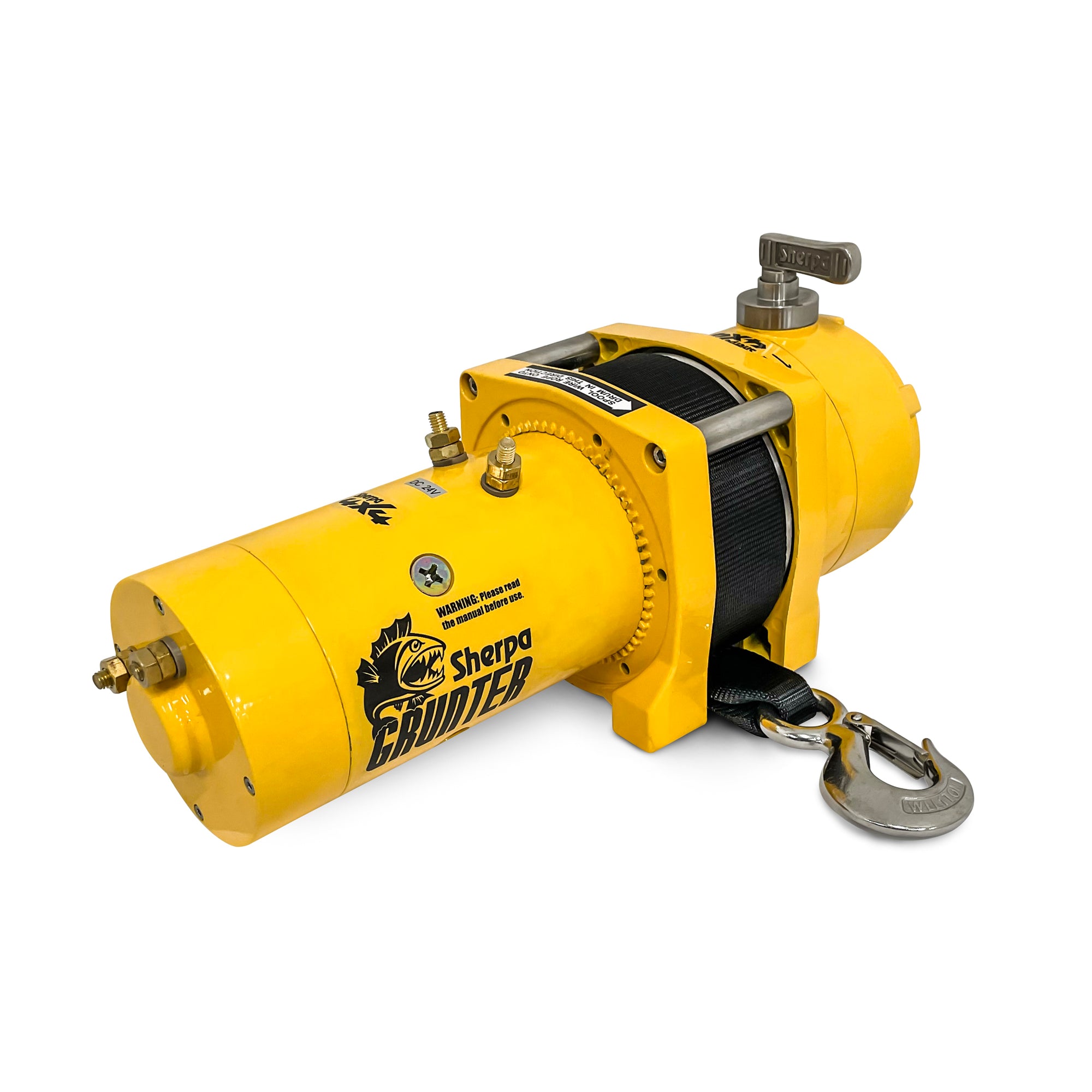
The Sherpa Grunter boat trailer winch arrived promptly in it's custom packaging.
Mounting the winch on the boat trailer was pretty much straight forward apart from having to lengthen the elongated hole in the mounting plate by five millimetres to match the mounting holes on the trailer.
Some time was required to design a mounting plate and associated bits for the control box and another for the remote control head unit. Given the winch certainly stands out when the trailer is parked at the boat ramp car park, it was decided to combine the control box mounting plate with a theft proof winch mount just in case some individual decided they need the winch more than I did.
In all, mounting all of the components was a straight forward exercise, the electrical wiring too was a breeze, the supplied cables for the vehicle were ample though I did opt for a dedicated negative cable rather than using the vehicle chassis for the negative rail.
After handling the various parts it became obvious the quality is second to none, even down to the paper and colour print quality of the user manual.
At this stage the remote has only been used twice and it certainly makes handling the boat and controlling the winch single handed with no drama particularly in a cross wind retrieve.
The Grunter is certainly an impressive beast and will make life much easier when it comes time to retrieve the boat after a long day on the water, particularly as one gets older.
Only recently had winch installed on my boat trailer and auto electrician wired up my 4x4 truck and winch, used it the other day to test it out and it went like a dream, very easy to use and operate and pulled my boat onto the trailer very quickly. Very well made and should last me a life time, so far am very very happy with this purchase, overall a great winch and cost was very reasonable .
Sherpa 4x4 'BIG V4' Air Compressor (400 L/min) Bundle Deals
Sherpa 4x4 Tyre Deflators - 4 Pack
Great product. Wish I had purchased it when I bought the winch. Just wondering if it maybe an idea to put it in and sell it as all one product. A combo pack. Makes life easy. Just a thought.
Sherpa 4x4 'Grunter' Electric Boat Trailer Winch
Excellent so far. WE are using it in a commercial application to help run Air jacks for Mobile tyre changing.
Sherpa 4x4 'The Mustang' - 9,500Lb Winch
Vg
Great winch fast delivery would buy again thanks
Good customer service
Works great,worth buying.
Ordered my winch Thursday morning was delivered to my door the next day awesome service thanks
Happy with my purchase to date. Well packaged and delivered in a timely fashion. Quality appears good. Now time to get some hours on it.
Wireless remote